Russian-Language Activities for Kids in Seattle and the Eastside
Updated: Sep 1
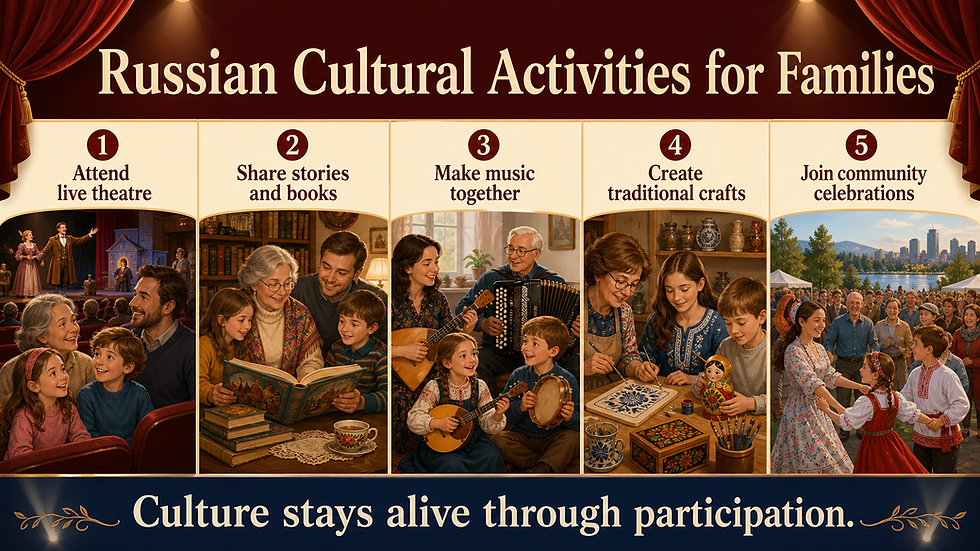
Families looking for Russian-language activities in Seattle, Bellevue and the Eastside often want more than formal lessons. They want children to use Russian with other people, encounter stories that matter and feel that the language belongs in play as well as study. A strong family plan can combine structured programs with low-pressure cultural experiences: theatre, books, music, crafts, performances and regular conversation. No single activity must carry the entire responsibility for language maintenance.
Russian-language theatre classes
Theatre gives children a reason to speak, listen and repeat. Lines are connected to actions and relationships, while rehearsal creates recurring contact with vocabulary. Bilingual classes can also support children whose comprehension is stronger than their spoken fluency.
Theatre33’s Youth Drama Studio currently lists Russian and bilingual options for age-based groups. Confirm the language format of the specific session before registering.
Family performances
A Russian-language play turns listening into a shared event. Children follow gesture, music, design and familiar story patterns even when some vocabulary is new. Discuss the plot beforehand and choose age-appropriate running times.
Check each Theatre33 production for spoken language and subtitle details. A multilingual theater’s format varies from show to show.
Books that lead to action
Reading becomes more engaging when children draw a scene, perform a dialogue, create puppets or invent an alternate ending. Choose texts slightly below the child’s maximum reading level when the goal is pleasure and fluency.
Let the child select characters and decide how to stage the story. Creative ownership can reduce resistance to heritage-language reading.
Music, movement and visual art
Songs provide rhythm and repetition, while crafts and movement give vocabulary a physical context. Families can learn a song, illustrate images from it and create a short performance.
Avoid turning every activity into a correction session. Respond to meaning first, then model useful language naturally.
Conversation with a real purpose
Children are more likely to speak when language accomplishes something: planning a menu, interviewing a grandparent, explaining a game or making a video for relatives. Purpose creates motivation that worksheets cannot always supply.
Assign roles that require genuine information exchange. If the adult already knows every answer, the conversation can feel like a test.
Community without pressure
Language groups, cultural events and multilingual arts can help children hear different accents and meet peers with varied identities. Russian-speaking communities are diverse and should not be treated as one nationality or viewpoint.
Choose spaces that are welcoming about mixed fluency. Correctness matters, but belonging is what keeps children willing to return and use the language.
Remember that children develop differently
Age ranges and course descriptions are useful guides, not precise predictions. Two children of the same age may differ in reading fluency, sensory preferences, group experience, physical coordination, language exposure and comfort with attention. A strong teacher adapts the route into an exercise while preserving a meaningful learning goal. That might mean giving one student additional preparation time, using a partner before solo work or offering oral support with a script.
Families should share relevant information without defining the child by it. Ask what support is possible, then observe whether the student is participating, learning and recovering from challenge. Fit can also change: a program that was too demanding last year may be appropriate now, while a once-beloved class may stop meeting a growing student’s needs. Reassessment is part of responsible arts education, not a sign of failure.
How parents can support learning without taking over
Children benefit when adults protect the practical conditions for learning: arrive on time, keep rehearsal dates visible, provide a quiet place to review material and communicate important needs to the teacher. Artistic decisions, however, belong primarily between the student and instructor. Coaching every line at home can create conflicting directions and make children feel that rehearsal continues all evening.
Use open questions instead of giving notes. Ask what the character wants, which exercise felt difficult or what changed during the scene. Praise preparation, listening, recovery and kindness to scene partners. These behaviors are within a child’s control and create a healthier foundation than praise based only on applause, casting or being naturally entertaining.
How to recognize meaningful progress
Progress in theatre is not always a louder voice or a larger role. It may appear as entering an exercise sooner, listening more closely, making a specific choice, speaking clearly enough for a partner or recovering after forgetting a line. Older students may become better at analyzing text, using feedback and preparing independently. Heritage-language learners may show greater comprehension or willingness to speak before accuracy noticeably changes.
Ask instructors what they are observing and compare the child with their own earlier work rather than with classmates. If the student remains curious, participates with increasing independence and can describe something they are learning, the class is likely producing value—even when the growth is gradual and the child never wants a professional acting career.
What to look for in any youth theatre program
Whatever the course title, families should expect clear age guidance, active participation, specific teaching goals and respectful communication. Instructors should explain how they introduce challenge, respond to mistakes and include students with different experience levels. A final performance can be valuable, but it should grow from learning rather than replace it.
For a local example, review Theatre33’s Youth Drama Studio and broader education programs. Current offerings include age-based pathways and Russian or bilingual options, but schedules, tuition, instructors and exact age bands can change. Confirm the specific session before registering.
Frequently asked questions
What if my child understands Russian but answers in English?
Continue meaningful Russian input, model possible responses and create low-pressure reasons to speak without turning every exchange into a test.
Are bilingual activities useful?
Yes. They can create access and confidence while preserving substantial Russian use.
Where can families find current performances?
Use official Theatre33 production listings and verify language information for each event.
Explore children’s theatre in Bellevue
Families across Bellevue, Redmond, Kirkland, Seattle and the Eastside can explore current youth theatre classes, multilingual and Russian-language theatre and upcoming Theatre33 productions. If you have questions about language, placement, accessibility or readiness, contact Theatre33 before registering.
For more practical reading, see how theatre builds confidence in kids and teens and this introduction to teaching children the basics of acting.


Comments